
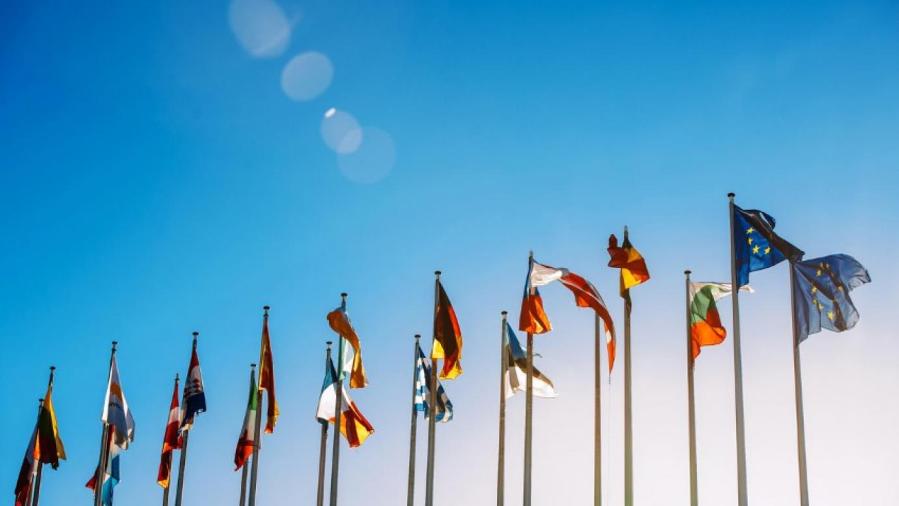
This brief piece on European cultural cooperation was published by The Sunday Times of Malta and is accessible at the link below.
Malta will soon start preparations to mark the twentieth anniversary of further European political expansion also thanks to our country’s entry to the European Union in 2004. Until then, we may take the opportunity to recall another important milestone, set forty years ago. Ten years earlier, at the Copenhagen Summit of October 1973, Heads of State adopted the Declaration on European Identity. Special attention was given to intangible values in order to highlight the position of Europe as a home for the development of cultural cooperation. The summit was called by French President Georges Pompidou. It stressed the role of culture as one of the founding elements of European identity.
By 1976, more member states felt ready to engage in more policy developments. In the Tindemans report, the Prime Minister of Belgium urged Europe to go beyond the confines of technocracy and bureaucracy. Slowly but surely, by 1981 the German and Italian Ministers of Culture initiated the Genscher-Colombo Plan that proposed the creation of a Council of Minister for cultural cooperation. Its aim was two-fold. Firstly, addressing growing institutional measures, chiefly by the European Court of Justice and the European Commission, favouring the extension of liberal market practices to the audiovisual and book production sectors, by seeking to safeguard the special nature of cultural expression. Secondly, doing so by encouraging intergovernmental cooperation on cultural matters.
This awareness led to the Solemn Declaration on the European Union, signed by member states in June 1983. The declaration is recorded as the first formal and shared expression proposing measures to forge deeper European cooperation in the fields of higher education, the safeguarding of cultural heritage, and the promotion of joint activities in the dissemination of culture. The will to instil a greater recognition of the diversity of European cultural identity and its underpinning values led, in time, to the development of political and economic measures that supported artists and other creatives, heritage practitioners, academics, researchers, students and local as well as regional authorities to engage in joint activity across the European space.
Today, many of us and our family members, friends or colleagues recognise and sometimes have benefitted from the connectivity provided by these initiatives. Programmes like Erasmus+ and Creative Europe have matured gradually, but in so doing have shaped our perspective and experience of our common European space. Cultural cooperation as part of the European project has been a long time coming, and bears fruit over time. However, once in motion, it has accompanied us and keeps inspiring us for future collaboration.
Photo: https://culture.ec.europa.eu/
PressReader.com – Digital Newspaper & Magazine Subscriptions


 Cultural Policy